19 September 2026
What does small batch mean for gin?
Small batch has no legal definition. The rules that define gin itself are strict about what goes in the bottle, juniper first among the botanicals, and say nothing about how much of it a distillery may make at once. Any producer, at any scale, can print the words on a label.
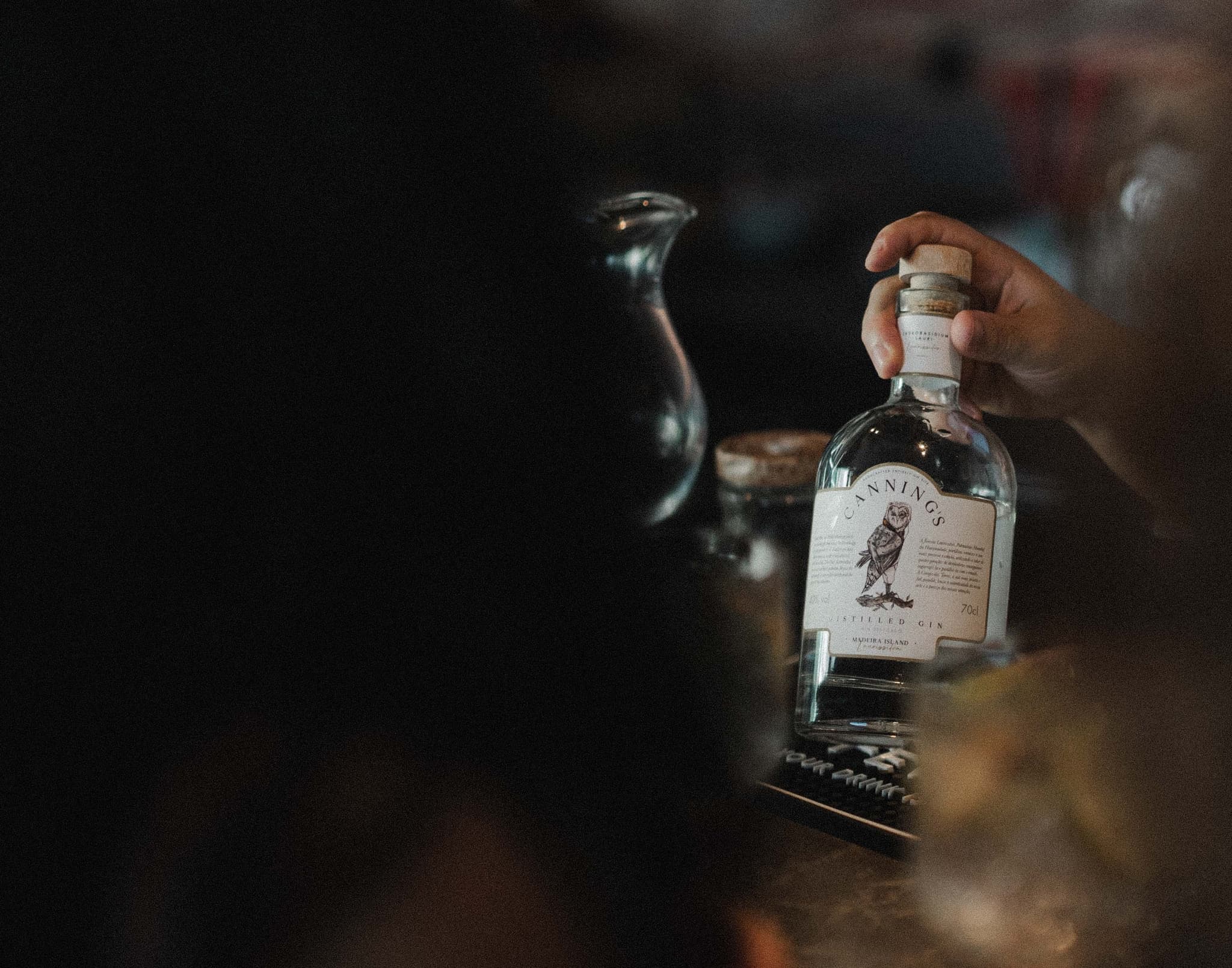
That does not make the term empty. It describes a way of working: runs small enough for one distiller to taste, adjust and stand behind. Canning's Dry Gin is made that way in Ribeira Brava, on the island of Madeira. This article covers what the phrase can honestly tell you, and how to check it.
No law defines it
Gin is a regulated word; small batch is not. Neither is craft, artisan or handmade. Even a gin club built on the word admits there is no written definition, and where a number does appear it is a house rule rather than a standard: Cornwall's Rosemullion Distillery, for one, holds that a small batch should come from a single run of under a thousand litres.
So the words on their own guarantee nothing. A global brand can print them beside a bottling code, and some do. The question worth asking is not whether the label says small batch, but whether anything behind the label can be checked.
What a small batch changes in the glass
Scale changes attention. In a small run the distiller tastes the spirit as it comes off the still and decides, run by run, where to make the cuts: what stays, what goes. Botanicals are natural ingredients; juniper and fruit vary from harvest to harvest, and small runs leave room to adjust rather than average the differences away.
None of that is automatic. A careless small batch is still a careless gin. The honest version of the claim is narrower: small runs make close attention possible, and the result still has to prove itself in the glass.
Small batch, craft, artisan: not the same claim
Craft speaks to who makes the gin; small batch to how much is made at once; artisan to little more than mood. In practice they overlap, since a distillery run by a few people rarely produces at industrial volume. But none of the three is protected, and a bottle can carry all of them without any meaning a thing.
Treat each as a claim waiting for evidence, not as a credential.
How to check the claim on a bottle
Three things can be checked from the outside. A named place of distillation, a town rather than just a country. A named producer who says who makes the gin and where. And independent verification: a medal from a competition that tastes blind is the strongest of the three, because the panel scores the liquid without seeing a label or a price. What an IWSC Gold Medal means explains how that works.
Provenance detail helps too. A gin that names its botanicals and says where they grow makes itself easy to verify; a gin that talks about passion does not.
What small batch means at Canning's
Canning's Dry Gin is distilled in small batches in Ribeira Brava, on Madeira's south coast, by C.N.A. Companhia Nova de Aguardente. The botanicals are the island's: mountain juniper, plants native to the Laurissilva laurel forest, passion fruit and pitanga, with pure mountain water from the highlands. Pitanga is a fruit too fragile to ship, which is its own argument for distilling where it grows. It is bottled at 40% vol.
The checkable parts sit where they should: the town is named, the producer is named, and the gin was blind-tasted to an IWSC Gold Medal in 2018. What makes it a Madeira gin has a page of its own.