21 September 2026
Poncha or gin? Two of Madeira's drinks, compared
Poncha is the traditional drink of Madeira: aguardente de cana, the island's sugar-cane spirit, worked with honey and fresh lemon until the three become one thing. The island also distils its own dry gin. They are not rivals so much as two registers of the same place, and knowing when to order which is part of drinking well here.
The island drinks more than these two, of course: Madeira wine has been famous for centuries, the cane spirit is a rum with a standing of its own, and what to drink in Madeira covers the full list. This guide takes just the pair: what poncha is, how the island drinks it, and where the island's gin fits beside it. Both are made from what grows here, which is the point of both.
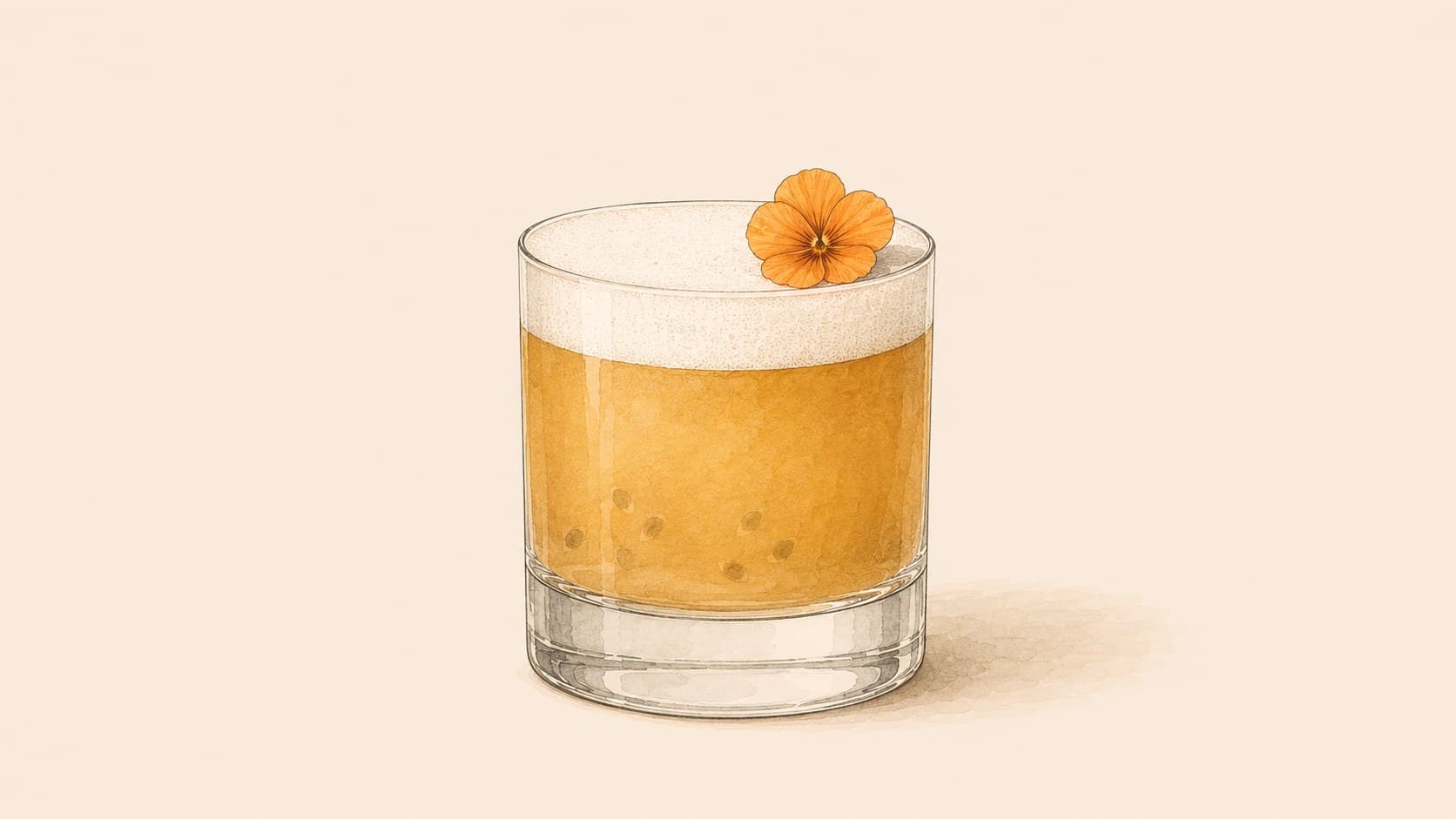
What poncha is
Poncha is built from three things: aguardente de cana, honey and lemon juice, stirred hard with a grooved wooden stick the locals call a caralhinho (in some houses, a mexelhote) until the honey dissolves and the drink turns cloudy and smooth. The stirring is not decoration; it is the technique that makes the drink.
It is old. The tourism board traces it to panch, a drink brought back from India and adapted on the island, and its home is Câmara de Lobos, where fishermen drank it against cold nights at sea. The classic lemon version still carries the name poncha à pescador, the fisherman's poncha.
How the island drinks it
Standing up, mostly. The traditional stop is a poncharia on the road through Câmara de Lobos or along the north coast, where the drink is made to order and lands on the counter with a dentinho, a small bite of peanuts or lupin beans on the house. Every bar has its own hand with the stick, and regulars will argue about whose is right.
Which fruit goes in it
Lemon is the original: poncha à pescador, the fisherman's version. Passion fruit is the one the island has taken up hardest, and it is what most bars pour if you do not specify. The tourism board lists tangerine and mint too, and English tomato, which surprises people.
Pitanga is the fruit people ask after and the one you are least likely to be handed. It grows here, but it belongs to the gin rather than the poncha: it is one of Canning's botanicals, distilled in with passion fruit instead of stirred in at the counter. The fruit is also too fragile to travel far, which is why it rarely reaches a bar in the first place.
How strong is poncha?
Poncha is mixed to order, so the honest answer is that its strength depends on the hand behind the counter. What goes into it is better defined. The base is aguardente de cana, the island's cane spirit, registered as Rum da Madeira and bottled at a minimum of 37.5% vol. Honey and citrus soften that; they do not remove it.
Which is why poncha catches people out. It arrives sweet and easy in a small glass, and the sugar hides the spirit. A bottled poncha off a supermarket shelf is usually the milder version; the one made in front of you at a poncharia is not. The name is protected — Poncha da Madeira is a registered geographical indication — but protection covers how it is made, not how many degrees end up in the glass.
For scale, the gin on the other counter is a fixed 40% vol and almost always served long, one measure stretched over ice and tonic. The poncha is the smaller glass and the shorter drink, and often the stronger pour of the two.
Poncha and gin come from the same place
Madeira's gin is built on the same logic as its poncha: use what the island grows. Canning's Dry Gin is distilled in small batches in Ribeira Brava, further along the same south coast, from mountain juniper, plants of the Laurissilva laurel forest, passion fruit and pitanga, with pure mountain water. Cane, honey and lemon on one counter; juniper and island fruit on the other.
The two even share a fruit. Passion fruit is the poncha variant most bars pour first, and it is one of the gin's botanicals, there in the glass alongside the sharper pitanga. Order both in one evening and you will taste the same island twice, by two different routes.
When to order which
Order poncha when the moment is social and short: at the counter after a levada walk, before dinner in Câmara de Lobos, whenever there is a caralhinho in sight. It is sweet, strong and direct, and it does not pretend otherwise.
Order the gin when you want the island in a longer, drier glass: a gin and tonic over plenty of ice with lime and mint, or one of the island-fruit cocktails, which lean on passion fruit and pitanga the way a poncharia leans on honey and lemon. One is a ritual; the other is a slower read of the same place.
Can you take them home?
Poncha travels badly, and that is part of its charm. It wants fresh lemon, a wooden stick and the hand of whoever is behind the counter. There are bottled versions, but the drink you remember was made in front of you.
The gin is the opposite: distilling is how the island's fruit gets into a bottle without losing itself. A fruit like pitanga is too fragile to ship, so it travels as a Madeira gin instead, 40% vol, first bottled in 2016 and blind-tasted to an IWSC Gold Medal in 2018. It is the island, sealed well enough to leave.